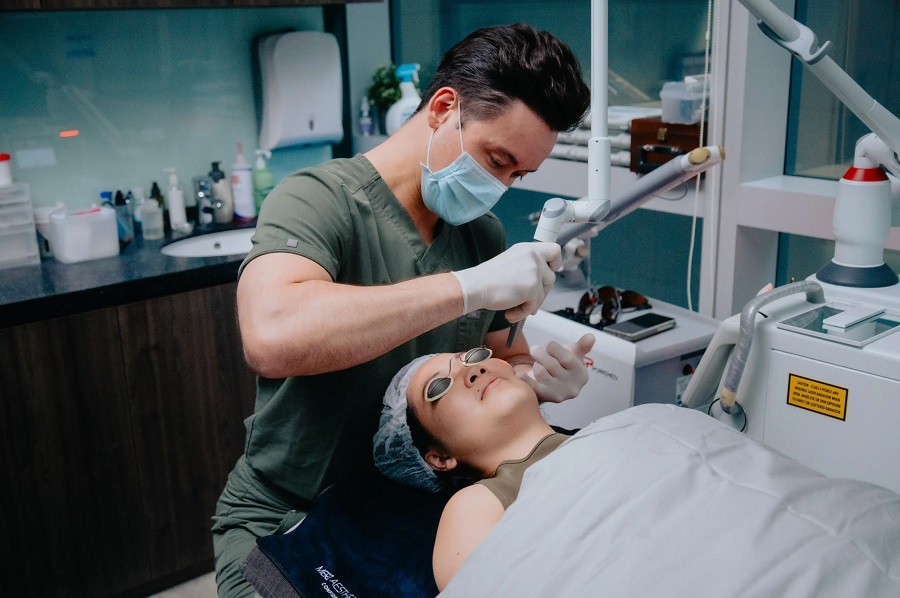
Uneven skin tone and dark patches on the face can be frustrating, particularly when they become more noticeable over time. One common cause is melasma, a skin condition that produces brown or greyish-brown patches, usually across the cheeks, forehead, upper lip and nose. It is particularly common in women and can be influenced by hormonal changes, genetics and sunlight exposure.
Melasma on cheeks, as well as on other parts of the body, can be treated using prescription creams, skincare products and specialist cosmetic procedures. Laser treatment is another option that has grown in popularity. Here is a beginner’s guide to the treatment.
- Melasma is a pigmentation disorder caused by an overproduction of melanin, the natural pigment responsible for our skin colour. It commonly affects the face and can be triggered or worsened by sunlight, hormonal changes and heat. Although it isn’t harmful or contagious, it can be difficult to manage.
- Laser treatment is considered a good, safe option. The controlled pulses of light energy target excessive pigments in the skin. Different technologies are available, designed to break down pigment particles so the body can gradually clear them. The choice of laser depends on the type and depth of pigmentation, skin colour and individual circumstances. Not every laser is suitable for every patient.
- Treatment normally begins with a consultation and examination of the affected areas. The skin is cleansed, and protective eyewear is worn. The practitioner then passes the laser device over the targeted areas, delivering short pulses of energy. Patients may experience a mild snapping or tingling sensation. Depending on the area being treated and the equipment used, an appointment may take around 15–30 minutes. Side effects may include temporary redness, warmth or sensitivity.
- There isn’t a standard number of treatments that works for everyone. Some people may notice an improvement after a few sessions, while others require a longer course of treatment. Sessions are often spaced several weeks apart to allow the skin to recover. Results depend on the severity of the melasma, the type of laser and the individual’s response.
- When performed by an appropriately qualified dermatologist or medical practitioner, laser treatment is a safe option for selected patients. A careful assessment and appropriate laser settings are essential so that any overriding health conditions can be identified for increased safety.
- Bangkok has many specialist skin and aesthetic clinics offering laser treatments for pigmentation. These clinics advertise laser-based treatments for pigmentation and related skin concerns. They provide a proper assessment, discuss the different treatment options and provide professional aftercare. It’s wise to check the doctor’s qualifications, the equipment being used and whether the proposed treatment is appropriate for a particular type of melasma.
Melasma laser treatment offers an option for people struggling with persistent facial pigmentation. Advances in laser technology now see dermatologists using additional ways to manage the condition. The condition requires ongoing management alongside the treatment. Daily sun protection, appropriate skincare and any recommended maintenance treatment are essential, even after a successful course of laser sessions.